Industry background
1.Pain Point 3: Personalized and Small Batch Production Needs
The automobile consumer market is transforming from "scale and standardization" to "personalization and customization", and consumers' demand for customized body appearance, interior components, and performance configurations is increasingly prominent. At the same time, the rapid iteration of new energy vehicles has given rise to a large demand for small-scale trial production. In the process of developing new vehicle models, the trial production of key components is usually only a few dozen to a few hundred pieces, and the traditional mold manufacturing cycle is as long as 3-6 months, with costs reaching hundreds of thousands to millions of yuan, which is difficult to meet the needs of rapid research and customized production.
2.Pain point 2: Integrated processing requirements
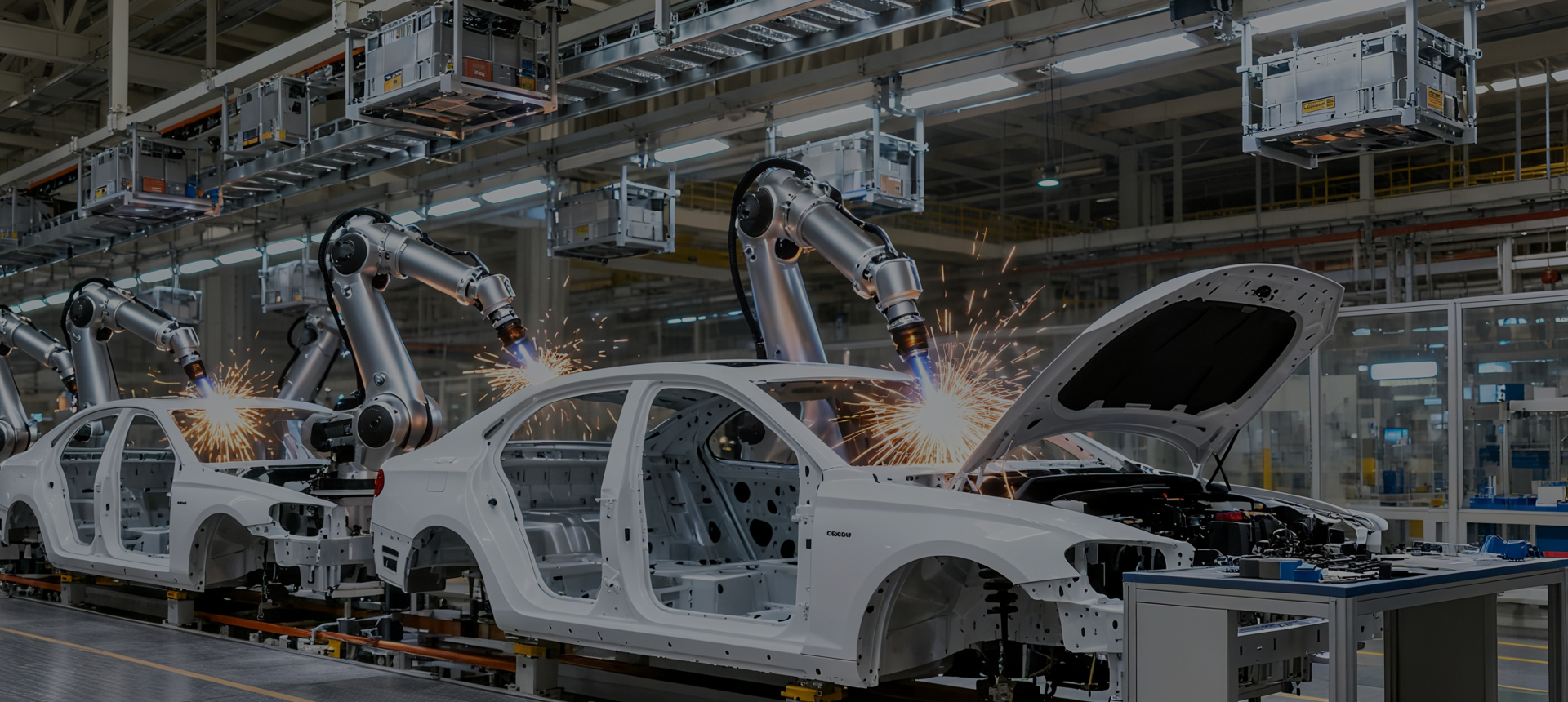
The requirements for structural complexity and functional integration of core components of automobiles, such as engine cylinder heads, transmission valve bodies, battery cooling plates, etc., are increasingly increasing. Traditional manufacturing processes have obvious limitations: casting processes are limited by draft angles and core structures, and cannot achieve integrated molding of complex internal flow channels and lattice structures; Although forging technology can improve material properties, it has poor adaptability to complex shapes and requires multiple process splicing, which not only increases assembly errors but also reduces structural reliability.
3.Pain point 1: Low carbonization and lightweight requirements
In traditional automobile manufacturing, the body, chassis, and power system components rely on forging, casting, and cutting processing, with material utilization rates generally only 40% -60%, and high energy consumption and pollutant emissions during the production process. The electrification transformation has further intensified the demand for lightweighting - in the context of the lack of breakthrough improvements in power battery energy density, for every 10% reduction in body weight, the range can be increased by 5% -8%, while reducing battery load and extending service life.
Solutions
Low carbonization and lightweight
Fold Up
金属增材制造通过拓扑优化设计与近净成形工艺,可在保证结构强度的前提下实现零部件 30%-45% 的减重,材料利用率超过 90%,单套动力系统零部件生产可减少约 1.2 吨碳排放,完美契合汽车行业低碳化与轻量化的双重诉求。
Integrated processing
Fold Up
金属增材制造基于 “逐层堆积” 的成形原理,彻底打破了 “制造可行性” 对设计的束缚。无论是发动机内部的异形冷却通道、电池包的一体化散热结构,还是底盘的仿生承力框架,均可通过增材制造实现单件成型,无需后续拼接或复杂加工。这一特性不仅解决了传统工艺无法攻克的结构难题,还能通过功能集成减少零部件数量(通常可减少 20%-50%),降低装配复杂度与故障率。
Personalization and small batch production
Fold Up
金属增材制造无需依赖模具,可直接根据数字模型实现 “按需生产”,小批量零部件的研发周期可缩短至 1-2 个月,成本降低 30%-50%。此外,在汽车售后市场,对于老旧车型配件、特种车辆专用部件等小众需求,增材制造可通过数字库存替代实体库存,实现 “零库存” 生产,有效解决传统售后配件供应周期长、库存成本高的痛点。
Recommended Products
Learn More
Learn More

Learn More
Learn More
Learn More
Learn More



0531-88762677
13365317793
info@lasertecam.com